The best coffee beans for beginners The best coffee beans for beginners Coffee break reading
Coffee break reading

The best coffee beans for beginners

Pact Coffee

Written by Pact Coffee / Views

Published - 07 September 2026 / Updated - 04 September 2026

Key takeaways

  • The best coffee beans for beginners are freshly roasted, speciality beans with balanced, familiar flavours such as chocolate, caramel, and nuts.
  • Medium and medium-dark roasts are often the easiest place to start, offering a balcen of sweetness, body, and acidity.
  • Choose your coffee based on how you brew it – espresso, cafetiere, and filter coffee all benefit from different grind sizes and flavour profiles.
  • You don’t need expensive equipment to enjoy great coffee. Fresh coffee and the right grind can make a bigger difference than an elaborate machine.
  • Start with flavour you already enjoy, then explore brighter, fruitier, or more unusual coffees as your palate develops.

Origins. Processing methods. Roast levels. Tasting notes. Enough brewing gear to fill a kitchen cupboard. Entering the world of speciality coffee can feel – unsurprisingly – complicated. 

The good news? You don’t need to understand a lot to find better coffee you’ll love.

For beginners, the best coffee beans are freshly roasted speciality coffee with familiar, approachable flavours – think chocolate, caramel, nuts, and subtle fruit. Start with a medium or medium-dark roast, choose a coffee that suits how you brew, and let your tastebuds do the rest.

What are the best coffee beans for beginners?

The best coffee beans for beginners are fresh, high-quality beans with a balanced flavour profile and tasting notes that are easy to recognise.

That usually means coffees with notes of:

  • Chocolate 
  • Caramel
  • Toffee
  • Hazelnut (or other nuts)
  • Brown sugar
  • Gentle stone fruit

These flavours tend to feel familiar. You don’t need to train your palate to enjoy them – you simply taste something comforting, sweet, and satisfying – and they’re easy to reach.

A good place to start is a medium roast. Medium roasting leaves enough of the coffee’s natural character intact while developing sweetness and body through the roasting process. The result is often balanced rather than extreme – not too bright, not too bitter, and suitable for a range of brewing methods,

You can read about the best medium roasts here.

At Pact, we recommend thinking about coffee in the same way you might think about food or wine. There’s no single best flavour. There is simply the flavour(s) you enjoy.

Want more help choosing by roast and brewing style, read our guide to the best coffee beans here.

Start with speciality coffee

If you’re new to coffee, you’ve probably seen the word ‘speciality’ everywhere. It sounds intimidating, but the idea is very simple.

Speciality coffee refers to high-quality coffee that’s been carefully grown, processed, and assessed for its flavour and quality. Organisations such as the Speciality Coffee Association (SCA) have helped establish internationally recognised standards for evaluating coffee.

What matters most for a beginner, though, is what ends up in your cup.

Better-quality coffee gives you more natural sweetness, clearer flavours, and less of the harsh bitterness people can associate with coffee,

That doesn’t mean every speciality coffee will taste the same. The beautiful thing about it is the wide spectrum of flavours you can get from coffee. A coffee from Brazil might taste deeply chocolatey and nutty, while one from Kenya could be floral, bright, and more reminiscent of berries or tea.

Which is exactly why starting with approachable flavours can be helpful.

Which roast is best for beginner coffee drinkers?

Medium roast – the best all-round starting point

For many beginners, medium roast coffee is the easiest, most pleasurable place to start. 

A medium roast offers a perfect sweet spot. You can still taste the work of the grower, and the unique characteristics of the country it’s from, but the roasting process has developed plenty of sweetness and body to complement it.

Expect flavours such as:

  • Caramel 
  • Chocolate 
  • Toffee
  • Nuts
  • Ripe fruit 

Medium roasts are also wonderfully versatile. Depending on the coffee, they can work beautifully as a filter coffee, in a cafetiere, or through an espresso machine – with or without milk. 

If you’d like to understand more about how roast level affects flavour, our guide to the best ground coffee explains the difference between light, medium, and dark roasts.

Medium-dark and dark roasts – for richer, bolder coffees

If your idea of a perfect brew involves a splash of milk, or deep, dark chocolatey flavours, then a medium-dark or dark roast may suit you better.

The darker the roast, the deeper, richer the flavours. Think dark chocolate, roasted nuts, and caramelised sugar. They also have enough intensity to come through beautifully in a flat white, latte, or cappuccino. 

Our guide to the best coffee beans for espresso is a useful next step if you’re looking to brew espresso at home.

Light roasts – worth exploring later

Light roasts can be extraordinary – but they often reveal brighter and more unusual flavours that are more divisive. 

You might find citrus, berries, florals, or tea-like qualities in the cup. For some people, that first sip is a revelation. For others, it’s quite different from what they expect coffee to taste like – which can then go one of two ways: they’re coffee habits are changed forever, or they’re completely put-off the idea.

There’s no reason to avoid light roasts as a beginner – but if you’re unsure where to start, a balanced medium roast is often the best entry points.

Choose coffee beans for your brewing method

The coffee you choose should also suit the way you make it.

Best beginner coffee for a cafetiere

A cafetiere is something that most people already have in their kitchen – and it’s one of the simplest ways to make excellent coffee at home.

Look for coffees with chocolatey, nutty, or caramel-like flavours and a satisfying body – something like Pact’s House Coffee, Fazenda Reis, or Terras Altas. These characteristics work particularly well with immersion brewing methods like the cafetiere, as it allows plenty of time for their flavours to develop.

You’ll also need a course grind if you’re buying ground coffee.

Read our full guide to choosing and brewing the best cafetiere coffee here.

Best beginner coffee for espresso

For espresso, you’ll want a coffee with a little more body and sweetness. 

Look for tasting notes such as chocolate, caramel, nuts, and toffee – particularly if you like milk-based drinks – like with Pact’s House Espresso (milk chocolate), Fruit & Nut Espresso (milk chocolate, almond, and raisin), and Bourbon Cream Espresso (bourbon cream biscuits).

Freshness and grind size matter a lot here. A coffee that’s ground too coarsely can taste sour and thin, while one that’s too finely ground can become very bitter.

Our guide to making better espresso at home explains how to get started.

Best beginner coffee for filter

Filter coffee’s a brilliant way to explore the full range of flavours across different origins.

Medium roasts are an excellent starting point, but it’s definitely worth experimenting with lighter roasts once you’re comfortable with your brewing practice. A filter brew can reveal subtle fruit, sweetness, and floral notes that you won’t find in a darker roast.

Similar to with cafetiere coffee, look for coffees with chocolatey, nutty, or caramel-like flavours and a satisfying body – something like Pact’s House Coffee, Fazenda Reis, or Terras Altas. These flavours are some of the easiest to reach and enjoy on a daily basis.

You can find step-by-step advice in Pact’s complete guide to filter coffee.

Should beginners buy wholebean or ground coffee?

If you have a grinder (or want to buy one), wholebean is the freshest (and best) option.

Grinding coffee immediately before brewing preserves more of the aromas and flavours that make a coffee interesting. A burr grinder is generally the best choice as it produces a more consistent grind size than a blade grinder.

Find out what the best grinder to buy is here.

But, you don’t need a grinder to make great coffee

Buying freshly roasted coffee that’s been ground for your brewing method is a perfectly good place to start. The important thing is matching the grind to your equipment.

If you’re buying coffee from a supermarket, many brands like Pact will show you what brewing method the coffee’s ground for. And if you’re buying directly from Pact, you can choose coffee and grind sizes to suit how you brew. 

Pact’s brew guides can help you get the best from whichever method you use.

How to find your favourite coffee as a beginner

The best thing to do is simply start with what sounds delicious to you.

If you love chocolate, look for chocolatey coffees. If you prefer caramel and nuts, start there. Or, if you already know you enjoy fruit-forward coffees, trying something with notes of berries, peach, or citrus.

Then pay attention.

Was the coffee too bitter? Too sharp? Did you want more sweetness? Every cup gives you an idea about what to try next.

A 250g bag is a good amount to experiment with, without committing to a huge quantity. At around 16 cups, it’s enough time to get to know a coffee properly – and enough space to find something new afterwards. Our guide to choosing the right coffee bag size can help if you’re deciding how much to buy.

Coffee gets much more interesting when you stop trying to find ‘the best’ coffee and start finding ‘your’ coffee.

FAQs

What coffee beans should a beginner buy?

Beginners should start with freshly roasted speciality coffee with approachable flavours like chocolate, caramel, nuts, or toffee. A medium roast is often most versatile and balanced place to begin.

Is light or dark roast better for beginners?

Neither is objectively better. Medium roasts are often easiest to beginners because they balance sweetness, body, and acidity. Darker roasts suit people who enjoy bold, rich coffee, while lighter roasts can offer brighter and fruitier flavours. 

Are whole coffee beans better than ground coffee?

Wholebean coffee stays fresh for longer and allows you to grind immediately before brewing. However, freshly ground coffee, ground specifically for your brewing method can still make an excellent cup.

What is the easiest coffee brewing method for beginners?

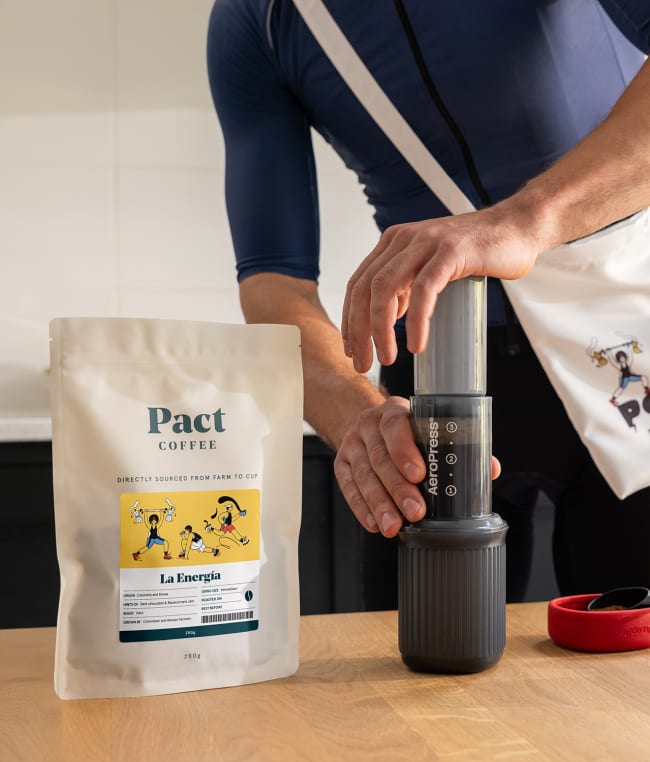
A cafetiere is one of the simplest methods to start with as it requires very little equipment and is forgiving to use. Filter machines and AeroPress brewers are also excellent beginner-friendly options.

Should beginner coffee drinkers buy expensive coffee?

Not necessarily. Start with high-quality, freshly roasted coffee rather than focusing on rarity or price. The best coffee for you is the one whose flavours you genuinely enjoy drinking.

How do I know which coffee flavours I’ll like?

Start with flavours you already enjoy in food and drink, or in your favourite coffee shop. If you love chocolate and nuts, choose coffees with those tasting notes. If you prefer fruit and tea, explore lighter, brighter coffees. Then use each cup to guide what you try next.

The best coffee beans for beginners

Pact Coffee

Written by Pact Coffee

Views

Published - 07 September 2026

Updated - 04 September 2026

Key takeaways

  • The best coffee beans for beginners are freshly roasted, speciality beans with balanced, familiar flavours such as chocolate, caramel, and nuts.
  • Medium and medium-dark roasts are often the easiest place to start, offering a balcen of sweetness, body, and acidity.
  • Choose your coffee based on how you brew it – espresso, cafetiere, and filter coffee all benefit from different grind sizes and flavour profiles.
  • You don’t need expensive equipment to enjoy great coffee. Fresh coffee and the right grind can make a bigger difference than an elaborate machine.
  • Start with flavour you already enjoy, then explore brighter, fruitier, or more unusual coffees as your palate develops.

Origins. Processing methods. Roast levels. Tasting notes. Enough brewing gear to fill a kitchen cupboard. Entering the world of speciality coffee can feel – unsurprisingly – complicated. 

The good news? You don’t need to understand a lot to find better coffee you’ll love.

For beginners, the best coffee beans are freshly roasted speciality coffee with familiar, approachable flavours – think chocolate, caramel, nuts, and subtle fruit. Start with a medium or medium-dark roast, choose a coffee that suits how you brew, and let your tastebuds do the rest.

What are the best coffee beans for beginners?

The best coffee beans for beginners are fresh, high-quality beans with a balanced flavour profile and tasting notes that are easy to recognise.

That usually means coffees with notes of:

  • Chocolate 
  • Caramel
  • Toffee
  • Hazelnut (or other nuts)
  • Brown sugar
  • Gentle stone fruit

These flavours tend to feel familiar. You don’t need to train your palate to enjoy them – you simply taste something comforting, sweet, and satisfying – and they’re easy to reach.

A good place to start is a medium roast. Medium roasting leaves enough of the coffee’s natural character intact while developing sweetness and body through the roasting process. The result is often balanced rather than extreme – not too bright, not too bitter, and suitable for a range of brewing methods,

You can read about the best medium roasts here.

At Pact, we recommend thinking about coffee in the same way you might think about food or wine. There’s no single best flavour. There is simply the flavour(s) you enjoy.

Want more help choosing by roast and brewing style, read our guide to the best coffee beans here.

Start with speciality coffee

If you’re new to coffee, you’ve probably seen the word ‘speciality’ everywhere. It sounds intimidating, but the idea is very simple.

Speciality coffee refers to high-quality coffee that’s been carefully grown, processed, and assessed for its flavour and quality. Organisations such as the Speciality Coffee Association (SCA) have helped establish internationally recognised standards for evaluating coffee.

What matters most for a beginner, though, is what ends up in your cup.

Better-quality coffee gives you more natural sweetness, clearer flavours, and less of the harsh bitterness people can associate with coffee,

That doesn’t mean every speciality coffee will taste the same. The beautiful thing about it is the wide spectrum of flavours you can get from coffee. A coffee from Brazil might taste deeply chocolatey and nutty, while one from Kenya could be floral, bright, and more reminiscent of berries or tea.

Which is exactly why starting with approachable flavours can be helpful.

Which roast is best for beginner coffee drinkers?

Medium roast – the best all-round starting point

For many beginners, medium roast coffee is the easiest, most pleasurable place to start. 

A medium roast offers a perfect sweet spot. You can still taste the work of the grower, and the unique characteristics of the country it’s from, but the roasting process has developed plenty of sweetness and body to complement it.

Expect flavours such as:

  • Caramel 
  • Chocolate 
  • Toffee
  • Nuts
  • Ripe fruit 

Medium roasts are also wonderfully versatile. Depending on the coffee, they can work beautifully as a filter coffee, in a cafetiere, or through an espresso machine – with or without milk. 

If you’d like to understand more about how roast level affects flavour, our guide to the best ground coffee explains the difference between light, medium, and dark roasts.

Medium-dark and dark roasts – for richer, bolder coffees

If your idea of a perfect brew involves a splash of milk, or deep, dark chocolatey flavours, then a medium-dark or dark roast may suit you better.

The darker the roast, the deeper, richer the flavours. Think dark chocolate, roasted nuts, and caramelised sugar. They also have enough intensity to come through beautifully in a flat white, latte, or cappuccino. 

Our guide to the best coffee beans for espresso is a useful next step if you’re looking to brew espresso at home.

Light roasts – worth exploring later

Light roasts can be extraordinary – but they often reveal brighter and more unusual flavours that are more divisive. 

You might find citrus, berries, florals, or tea-like qualities in the cup. For some people, that first sip is a revelation. For others, it’s quite different from what they expect coffee to taste like – which can then go one of two ways: they’re coffee habits are changed forever, or they’re completely put-off the idea.

There’s no reason to avoid light roasts as a beginner – but if you’re unsure where to start, a balanced medium roast is often the best entry points.

Choose coffee beans for your brewing method

The coffee you choose should also suit the way you make it.

Best beginner coffee for a cafetiere

A cafetiere is something that most people already have in their kitchen – and it’s one of the simplest ways to make excellent coffee at home.

Look for coffees with chocolatey, nutty, or caramel-like flavours and a satisfying body – something like Pact’s House Coffee, Fazenda Reis, or Terras Altas. These characteristics work particularly well with immersion brewing methods like the cafetiere, as it allows plenty of time for their flavours to develop.

You’ll also need a course grind if you’re buying ground coffee.

Read our full guide to choosing and brewing the best cafetiere coffee here.

Best beginner coffee for espresso

For espresso, you’ll want a coffee with a little more body and sweetness. 

Look for tasting notes such as chocolate, caramel, nuts, and toffee – particularly if you like milk-based drinks – like with Pact’s House Espresso (milk chocolate), Fruit & Nut Espresso (milk chocolate, almond, and raisin), and Bourbon Cream Espresso (bourbon cream biscuits).

Freshness and grind size matter a lot here. A coffee that’s ground too coarsely can taste sour and thin, while one that’s too finely ground can become very bitter.

Our guide to making better espresso at home explains how to get started.

Best beginner coffee for filter

Filter coffee’s a brilliant way to explore the full range of flavours across different origins.

Medium roasts are an excellent starting point, but it’s definitely worth experimenting with lighter roasts once you’re comfortable with your brewing practice. A filter brew can reveal subtle fruit, sweetness, and floral notes that you won’t find in a darker roast.

Similar to with cafetiere coffee, look for coffees with chocolatey, nutty, or caramel-like flavours and a satisfying body – something like Pact’s House Coffee, Fazenda Reis, or Terras Altas. These flavours are some of the easiest to reach and enjoy on a daily basis.

You can find step-by-step advice in Pact’s complete guide to filter coffee.

Should beginners buy wholebean or ground coffee?

If you have a grinder (or want to buy one), wholebean is the freshest (and best) option.

Grinding coffee immediately before brewing preserves more of the aromas and flavours that make a coffee interesting. A burr grinder is generally the best choice as it produces a more consistent grind size than a blade grinder.

Find out what the best grinder to buy is here.

But, you don’t need a grinder to make great coffee

Buying freshly roasted coffee that’s been ground for your brewing method is a perfectly good place to start. The important thing is matching the grind to your equipment.

If you’re buying coffee from a supermarket, many brands like Pact will show you what brewing method the coffee’s ground for. And if you’re buying directly from Pact, you can choose coffee and grind sizes to suit how you brew. 

Pact’s brew guides can help you get the best from whichever method you use.

How to find your favourite coffee as a beginner

The best thing to do is simply start with what sounds delicious to you.

If you love chocolate, look for chocolatey coffees. If you prefer caramel and nuts, start there. Or, if you already know you enjoy fruit-forward coffees, trying something with notes of berries, peach, or citrus.

Then pay attention.

Was the coffee too bitter? Too sharp? Did you want more sweetness? Every cup gives you an idea about what to try next.

A 250g bag is a good amount to experiment with, without committing to a huge quantity. At around 16 cups, it’s enough time to get to know a coffee properly – and enough space to find something new afterwards. Our guide to choosing the right coffee bag size can help if you’re deciding how much to buy.

Coffee gets much more interesting when you stop trying to find ‘the best’ coffee and start finding ‘your’ coffee.

FAQs

What coffee beans should a beginner buy?

Beginners should start with freshly roasted speciality coffee with approachable flavours like chocolate, caramel, nuts, or toffee. A medium roast is often most versatile and balanced place to begin.

Is light or dark roast better for beginners?

Neither is objectively better. Medium roasts are often easiest to beginners because they balance sweetness, body, and acidity. Darker roasts suit people who enjoy bold, rich coffee, while lighter roasts can offer brighter and fruitier flavours. 

Are whole coffee beans better than ground coffee?

Wholebean coffee stays fresh for longer and allows you to grind immediately before brewing. However, freshly ground coffee, ground specifically for your brewing method can still make an excellent cup.

What is the easiest coffee brewing method for beginners?

A cafetiere is one of the simplest methods to start with as it requires very little equipment and is forgiving to use. Filter machines and AeroPress brewers are also excellent beginner-friendly options.

Should beginner coffee drinkers buy expensive coffee?

Not necessarily. Start with high-quality, freshly roasted coffee rather than focusing on rarity or price. The best coffee for you is the one whose flavours you genuinely enjoy drinking.

How do I know which coffee flavours I’ll like?

Start with flavours you already enjoy in food and drink, or in your favourite coffee shop. If you love chocolate and nuts, choose coffees with those tasting notes. If you prefer fruit and tea, explore lighter, brighter coffees. Then use each cup to guide what you try next.